
Hurricanes Are Changing
Are we?

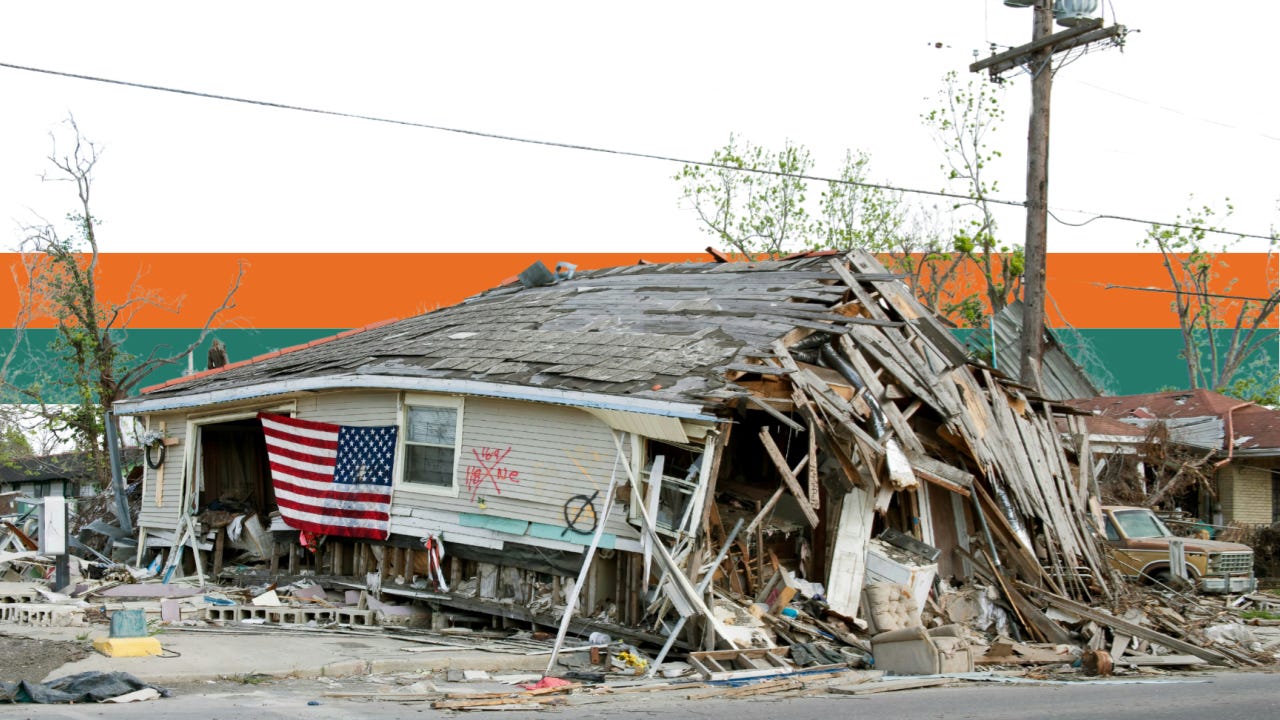
Welcome to another article in our climate change and public health series. Here, the C40 Centre’s scholar in residence and climate epidemiologist Dr. Quinn Adams explores the evolving science at the intersection of climate change and public health, with a particular focus on disasters and their health impacts.This hurricane season delivered a clear warning: the danger isn’t the number of storms, but how quickly they are intensifying and how much more damage they can unleash. Forecasts called for an active year due to record-warm ocean temperatures, and while the total number of hurricanes actually fell below the global long-term average, the storms that did form were far more intense. We saw an unusually high share of major hurricanes, including three that reached Category 5 strength, something recorded only once before. And even without a U.S. landfall for the first time in a decade, many states still experienced deadly flash floods, widespread coastal inundation, and damaging tropical-storm force winds across the Eastern seaboard.
In other words, a “quiet” season doesn’t guarantee safety.
Hurricane Melissa, the defining event of the season, passing through New Hope, Jamaica, and Chivrico, Cuba, and leaving widespread impacts throughout the Caribbean, made that reality impossible to ignore. Its rapid intensification and cascading impacts revealed how quickly storms can overwhelm systems they hit. We typically talk about hurricanes in terms of wind speed, flood height, and economic losses. But Melissa exposed something deeper. The greatest risks now emerge not during landfall, but in the hours, days, and weeks afterward, when power grids fail, medications spoil, indoor temperatures rise, and the long shadow of mold, contaminated water, and trauma begins to settle over communities.
This season underscored both the rising public-health risks of extreme storms and the difference resilience investments can make. As hurricanes, fueled by unusually warm oceans, continue to intensify, the true measure of impact isn’t just the storm itself—it’s the systems it collides with.
The Health Crisis After the Sky Clears
On top of the fatalities, this season brought a cascade of health crises, from the immediate upheaval of mass evacuations, injuries, and disrupted livelihoods to the longer-term toll of mental health strain, crop losses, and deepening food insecurity. In several small island nations, where many households were already facing hunger, storm-driven agricultural destruction pushed communities even closer to the edge.
In Melissa’s wake, emergency rooms saw spikes in heat illness as temperatures surged inside powerless homes. Several Gulf Coast hospitals struggled to keep dialysis and NICU patients stable during extended outages. Boil-water advisories spread as wastewater systems flooded. Mold took root quickly, and asthma visits followed.
These are not anomalies anymore. They are becoming the defining health challenges of the post-hurricane era. And yet, some places weathered the same conditions with far fewer disruptions. Their advantage wasn’t luck. It was preparation.
Where Resilience Made the Difference
Even in a season defined by Hurricane Melissa’s devastation, there were glimpses of what works when preparedness is treated as a public-health priority.
Jamaica
Before Melissa made landfall, Jamaica had already lined up a World Bank–backed catastrophe bond that triggered a full $150 million payout within days of the storm, giving cities and local authorities fast, flexible funds to stabilize essential services and start rebuilding rather than waiting months for relief. At the same time, the Jamaica Red Cross and IFRC worked directly with municipal leaders to pre-position supplies and open shelters ahead of impact. Once the storm passed, those same partnerships shifted quickly to health: safe water, medical care, and mental health and psychosocial support teams embedded in every aid distribution, addressed an often-neglected health burden after disasters and recognizing trauma as a core health impact, not an afterthought.
North Carolina & the U.S. East Coast
When Tropical Depression Chantal flooded central North Carolina and knocked out power for tens of thousands, Healthcare Ready activated its emergency operations to protect healthcare access, pharmacies, dialysis centers, and community clinics across the East Coast, using its Rx Open platform to track which facilities were open and redirect patients accordingly. This mattered even more as a heat wave followed the floods, pushing heat indices toward triple digits for communities still without reliable cooling, an example of health systems planning for compound risks, not just the storm itself.
Haiti
Although Melissa never made direct landfall in Haiti, its outer bands brought deadly flooding and landslides, damaging homes, 10 health facilities, and displacing more than 15,000 people into temporary shelters. What stands out is how quickly health actors moved to treat this as a public-health emergency, not just a flooding event. For example, Haiti’s Ministry of Public Health and Population, supported by PAHO, sent field teams into displacement sites and affected health facilities to assess needs, maintain essential services, and strengthen the local response. Additional medical kits and water, sanitation and hygiene (WASH) supplies were pre-positioned for deployment across affected departments to get ahead of a likely rise in cholera and other waterborne diseases after the floods. In the wake of Melissa, Haiti reinforced nationwide cholera surveillance and rapid response, focusing on high-risk departments and displacement sites, with rapid response teams disinfecting homes and water systems and repairing damaged water infrastructure.Health workers and partners carried out door-to-door awareness campaigns and deployed mobile teams in affected neighborhoods, distributing water purification tablets, oral rehydration salts, and hygiene supplies, and providing preventive treatment to close contacts of cholera cases.
A New Model for Storm-Ready Cities
Melissa showed us not only where the vulnerabilities lie, but what effective action looks like. Cities that performed well this year like Tampa, FL; Fayetteville, NC; and Bridgetown, Barbados to name a few tended to do three things: They used anticipatory action, focusing on the most vulnerable populations; they invested in reliable, decentralized energy for essential services; and they built trust and communication channels before the storm. These actions are not high-tech miracles. They are practical, replicable, and already working. This season made one thing clear: resilience has become a core part of public health. Cities that invested early were better able to protect residents, keep essential services running, and limit cascading harms.
Cities don’t have to start from scratch. Practical, evidence-based tools already exist to help local governments strengthen their defenses against intensified storms and the health risks that follow. There is already clear guidance on implementing nature-based solutions, urban flood management, and heat-reducing tree canopy strategies as actionable steps cities can take now to build resilience before the next hurricane season.
As storms continue to intensify, strengthening these systems isn’t optional—it’s the work that will determine how communities weather the years ahead.
What we are reading
Chiara: I recently finished two short books that do the same thing: encouraging the reader to go granular and really tune into her surroundings. Mary Oliver’s Winter Hours does this from a place of wonder focusing on nature, whereas Annie Erneaux’s Journal du dehors comes more from a place of incredulity at humanity’s 80s and 90s conversational quirks. I liked both!
David: A friend lent me Peter Attia’s Outlive. It’s a brilliant and well written argument in favour of preventative medicine - one that needs to be read by people in their 20’s and 30’s, not just 50’s and beyond.
Quinn: I recently picked up The Anomaly by Hervé Le Tellier. A flight duplicated mid-air sets off a chain of events that blends sci-fi, suspense, and philosophy in unexpected ways. It’s gripping, darkly funny at moments, and full of ideas about identity and fate that are making it hard to put down.
 | A guest post by
|