

What the facts?
Five lessons from incubating a global city climate disinformation initiative

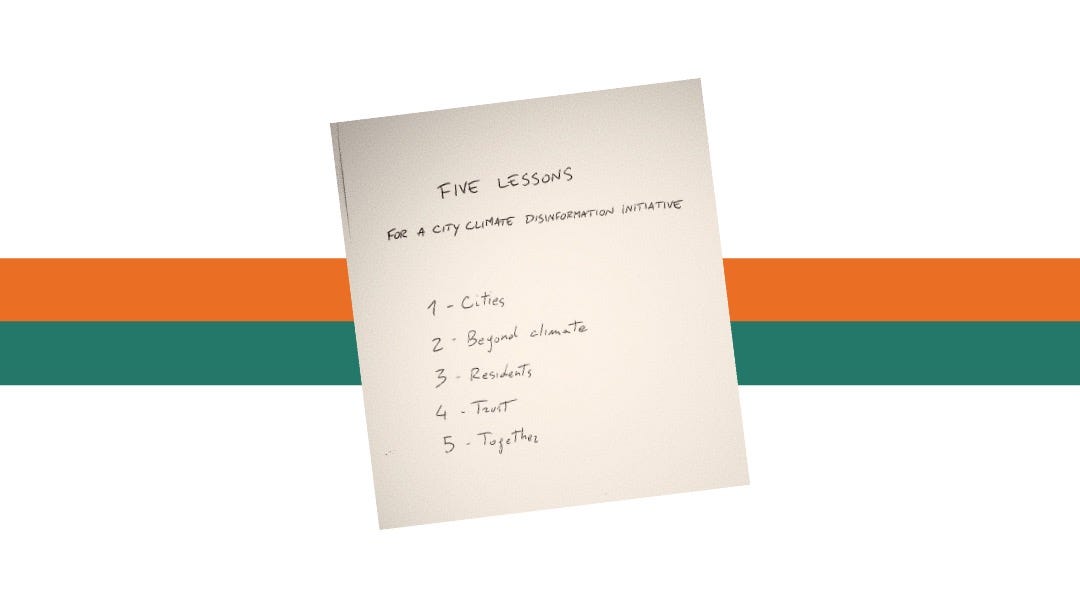
I have been working on a special project over the past few months: combining into one powerhouse all of C40’s expertise on supporting mayors in making the case for climate action in the face of disinformation. During London Climate Action Week my private work was finally revealed when Mayor of London Sadiq Khan launched City Climate Facts (CCF), a global initiative designed to help city leaders tackle the growing threat of climate disinformation and rebuild public trust in an increasingly polluted online information environment.
Here is what I learned along the way.
Lesson 1: Disinformation has gotten worse in cities
Cities are taking rapid action to bring down emissions faster than nation states, but mayors are reporting that they are experiencing increasingly well-coordinated campaigns that spread disinformation about both climate science and climate action. In some cities we see that these campaigns can be effective, as they weaponise genuine concerns residents may have—such as the cost of living—and can begin to erode residents’ trust in climate science and their local leaders alike.
Lesson 2: Misfluencers are issue-agnostic
We are a climate organisation, so naturally our focus is on climate disinformation but our opponents, the misfluencers making a profit off of spreading disinformation, are not necessarily as obsessed with the topic. Our mayors report receiving disinformation attacks using similar techniques across a range of policies. One day it may be about climate action, the next about health policies.
Lesson 3: City residents are worried about climate disinformation
More than 8 in 10 (84%) of city residents we polled in the lead up to the CCF launch reported that they regularly encounter information they believe may be false or misleading. Half of the respondents said manipulated or misleading photos were difficult to identify, while 47% said the same about written text.
Lesson 4: Mayors can be trusted local messengers on disinformation
In Cape Town, Santiago, and London, more than four in five residents said it is important for local governments to provide information that helps people understand issues affecting their community. When asked what support they wanted most, nearly half of Londoners (47%), Melburnians (48%) and Santiaguinos (47%) said they wanted a trusted online space where they could easily check whether something was true. Others called for simple guidance on identifying misleading claims and clearer explanations about how and why decisions are made.
Lesson 5: We are not alone
Evidence gaps in the disinformation research remain when it comes to climate, but these are mostly a result of disparities in research attention NOT the relative importance of the topic.Helpfully, misinformation in other subject areas such as health is well studied and we can draw many lessons from them. We are not alone! Combine that with our mayors’ excellent communications instincts and the support the initiative received from Selwin Hart, UN Special Adviser on Climate Action and Just Transition, and you can be certain we’ve got this.
Misfluencers beware, there’s a new kid on the block!
🎧 Listen to the latest episode of our podcast Cities 1.5
In the latest of our Cities 1.5 Hot Takes, Mayor Senkevych of Mykolaiv joins host David Miller to explore why communication matters now more than ever, and how the newly launched City Climate Facts initiative is helping cities tackle fake news with facts.
📚What we are reading
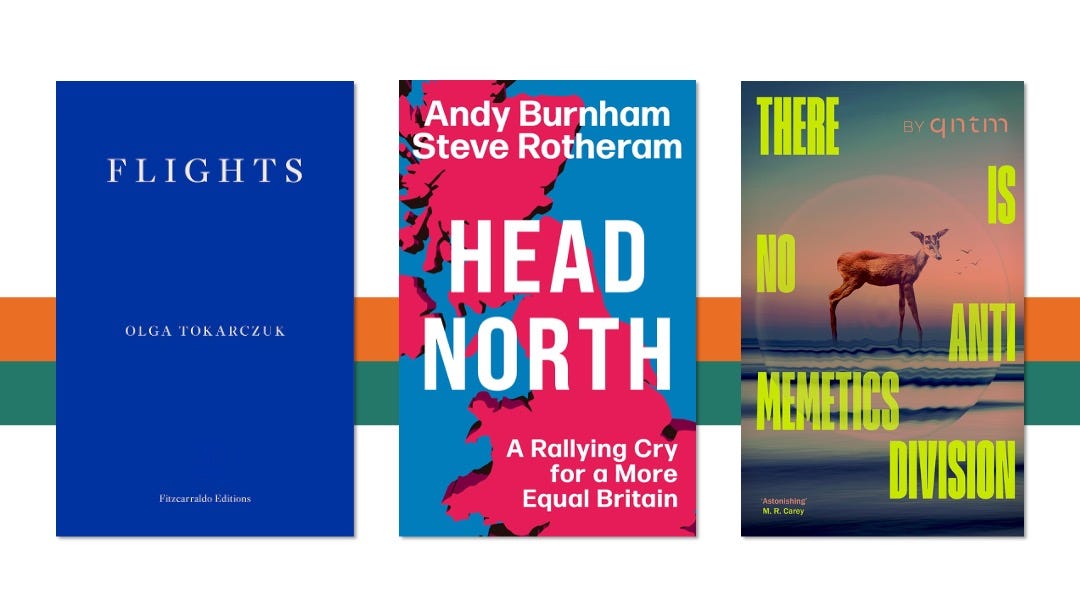
Chiara Morfeo: On brand for my upcoming summer holiday, I am reading Flights by Olka Tokarczuk. The edition with the deep blue cover.
David Miller: Head North: A rallying cry for a new Britain, by Andy Burnham and Steve Rotherham - two mayors outlining how we revitalise Great Britain economically and socially starting with respecting local autonomy. The book specifically speaks to the importance of climate action, amongst many other topics. Critical reading for city advocates - particularly because Mayor Burnham is now the PM….
Francesco Mellino: I really enjoyed There is no antimemetics division by qntm (Sam Hughes), a mind-bending sci-fi novel that builds a gripping story on the concept of the antimeme. In the words of the author, “an antimeme is an idea with self-censoring properties; an idea which, by its intrinsic nature, discourages or prevents people from spreading it. Antimemes are real. Think of any piece of information which you wouldn’t share with anybody, like passwords, taboos and dirty secrets. Or any piece of information which would be difficult to share even if you tried: complex equations, very boring passages of text, large blocks of random numbers, and dreams… But anomalous antimemes are another matter entirely. How do you contain something you can’t record or remember? How do you fight a war against an enemy with effortless, perfect camouflage, when you can never even know that you’re at war?”